Walter de Maria's 360˚ I Ching
My First Encounter With the Book of Changes

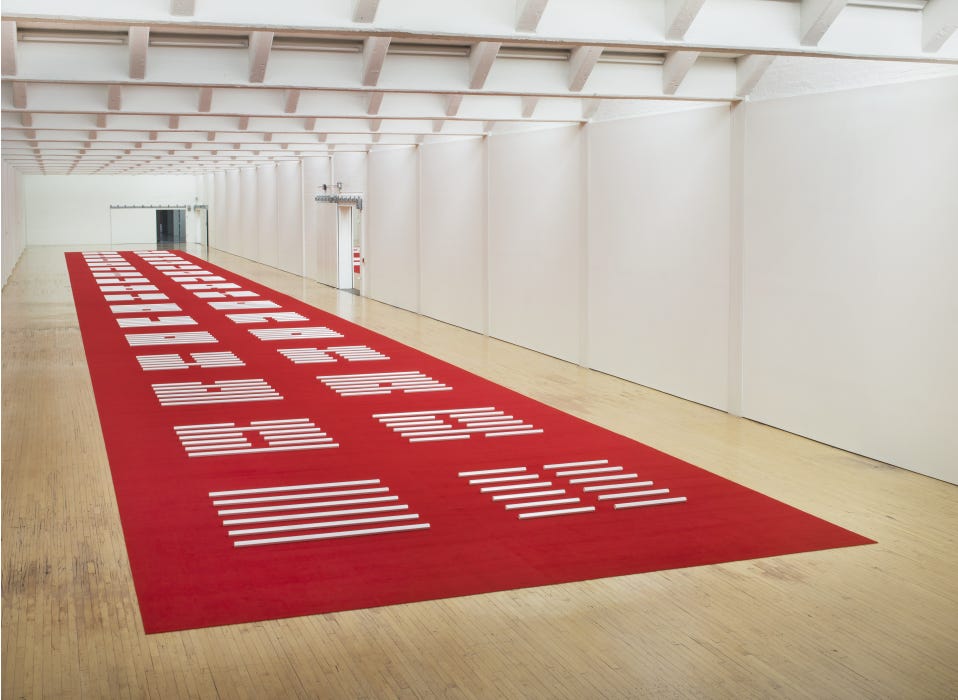
My first encounter with the I Ching was in 2016 at DIA: Beacon. This was a monumental artwork by the artist Walter de Maria called 360˚ I Ching (1981). Here the shape of the 64 hexagrams were reproduced by hexagonal oak rods painted white and laid out on a long red carpets, producing a work that is more than 10,000 square feet in dimension. My reaction to this rather stupefying display was: what is this?
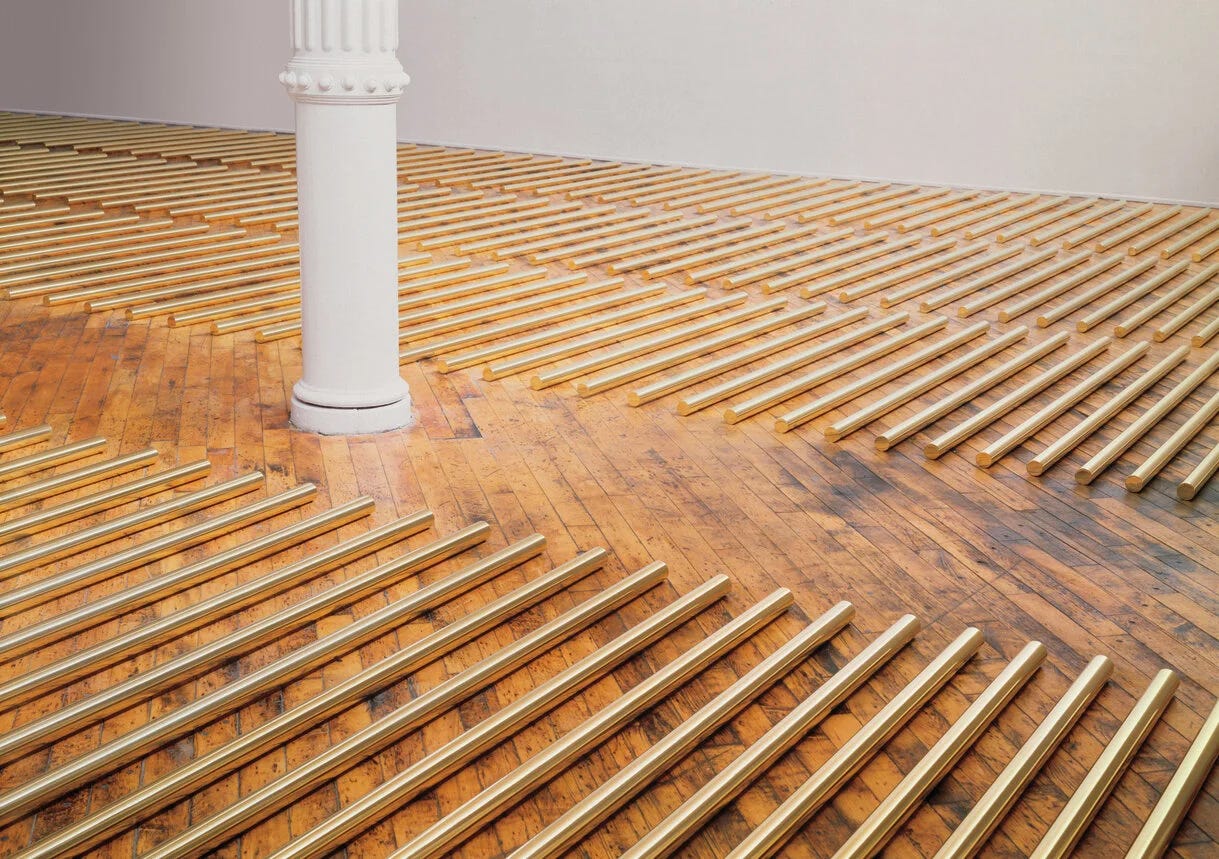
The American artist Walter de Maria is a forerunner of conceptual, minimal and land art. Two of his works are on permanent display in Soho in New York City: Earth Room (1977) in which a 3600 square foot apartment has been filled with three feet of earth that is tilled and watered regularly; just down the street is the Broken Kilometer (1979), in which a thousand meters of brass rod is laid out on the floor in meticulous precision, so that the floor itself seems to rise up at the far distance and the whole effect of one of psychedelic digital realism: It feels as if one were viewing a 3D rendering. Both of these pieces are run by DIA and open free to the public six days a week.
In Kassel Germany a third piece unites these two New York sculptures into a tripartite work: The Vertical Earth Kilometer (1977) consists of a kilometer of continuous brass rod sunk down in the earth. In these three pieces we can see the basic movement of the I Ching’s fundamental binary heaven and earth, in which The Broken Kilometer represents a heavenly (phallic) ideality and the Earth Room represents the receptive earth. The Vertical Earth Kilometer combines these opposites into a near purely conceptual piece in which the mind must follow, via the imagination alone, the ideality of the rod down into the body of the earth.
Yet another work with obvious allusions to the I Ching is The Lightning Field (1977). A work of land art, the piece consists of 400 stainless steel rods set in earth across a large field in the high desert of central New Mexico. Here the I Ching elemental powers of earth, heaven and thunder come together all surrounded by distant mountains.
It is precisely this mixture of the most minimal of aesthetic style—broken and unbroken lines—together the elementals, and the conceptual power to “explain the universe” that so bewitched me ten years ago in the museum on the Hudson river in Beacon. Like the dharma, the I Ching has ever since, been unfolding ever more of its aesthetic power.